Projects & Portfolios

2024.08–Present: Deep Learning-Based Semantic Segmentation of LiDAR Point Clouds for Civil Infrastructure
thumbnail

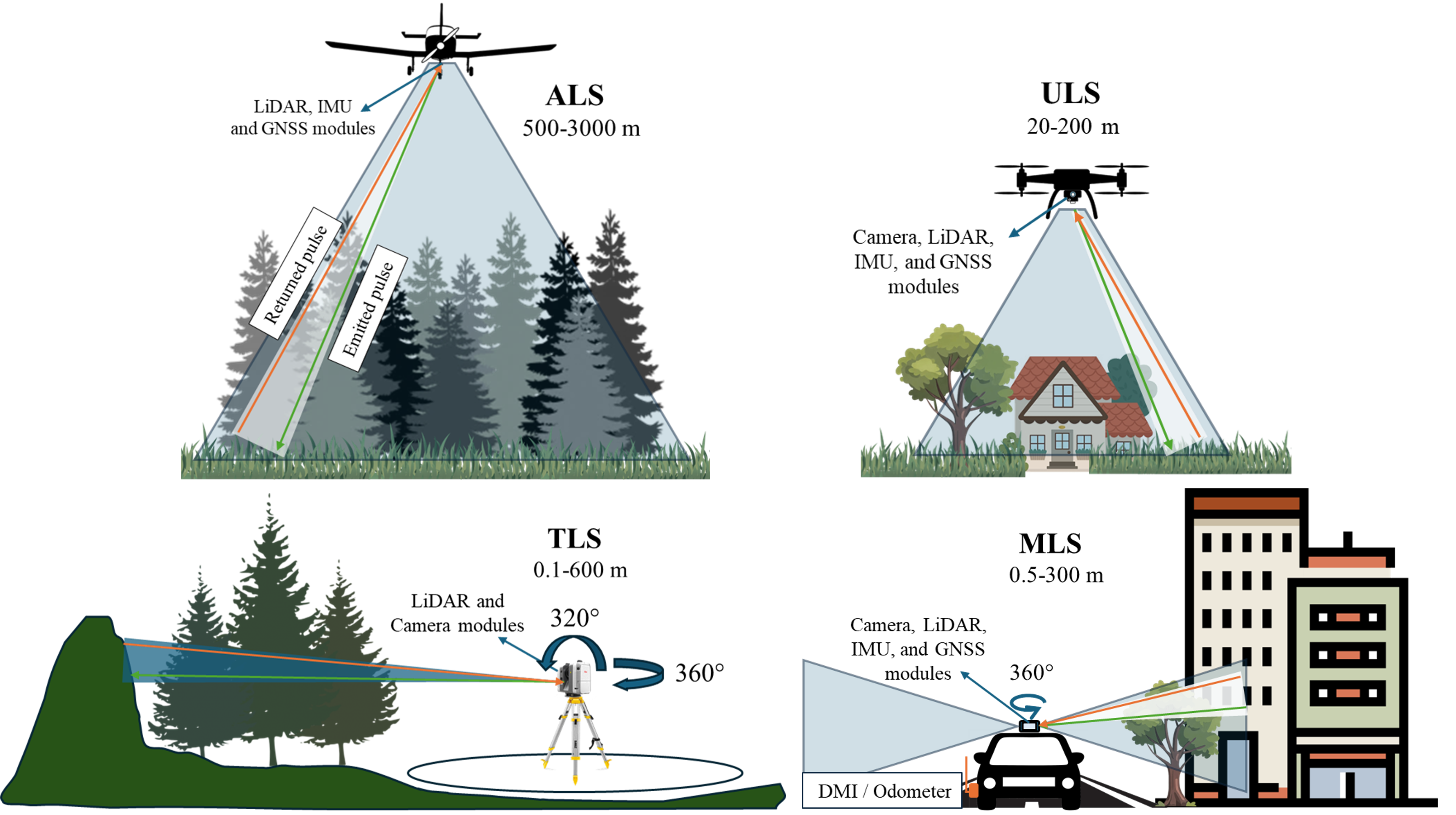
Developing a modular deep learning framework for high-resolution terrestrial LiDAR scans to automate semantic and instance segmentation of complex civil infrastructure components. The system integrates panoramic imagery projection, cross-modal supervision using Vision–Language Models (e.g., Grounded-SAM), and geometry-aware descriptors such as surface normals and point density. These capabilities support the creation of highly detailed Digital Twin models for structural analysis, FEM meshing, real-time asset monitoring, and long-term infrastructure management.
2024.08–Present: High-Fidelity Modeling and Deployment of a Digital Twin Building

thumbnail

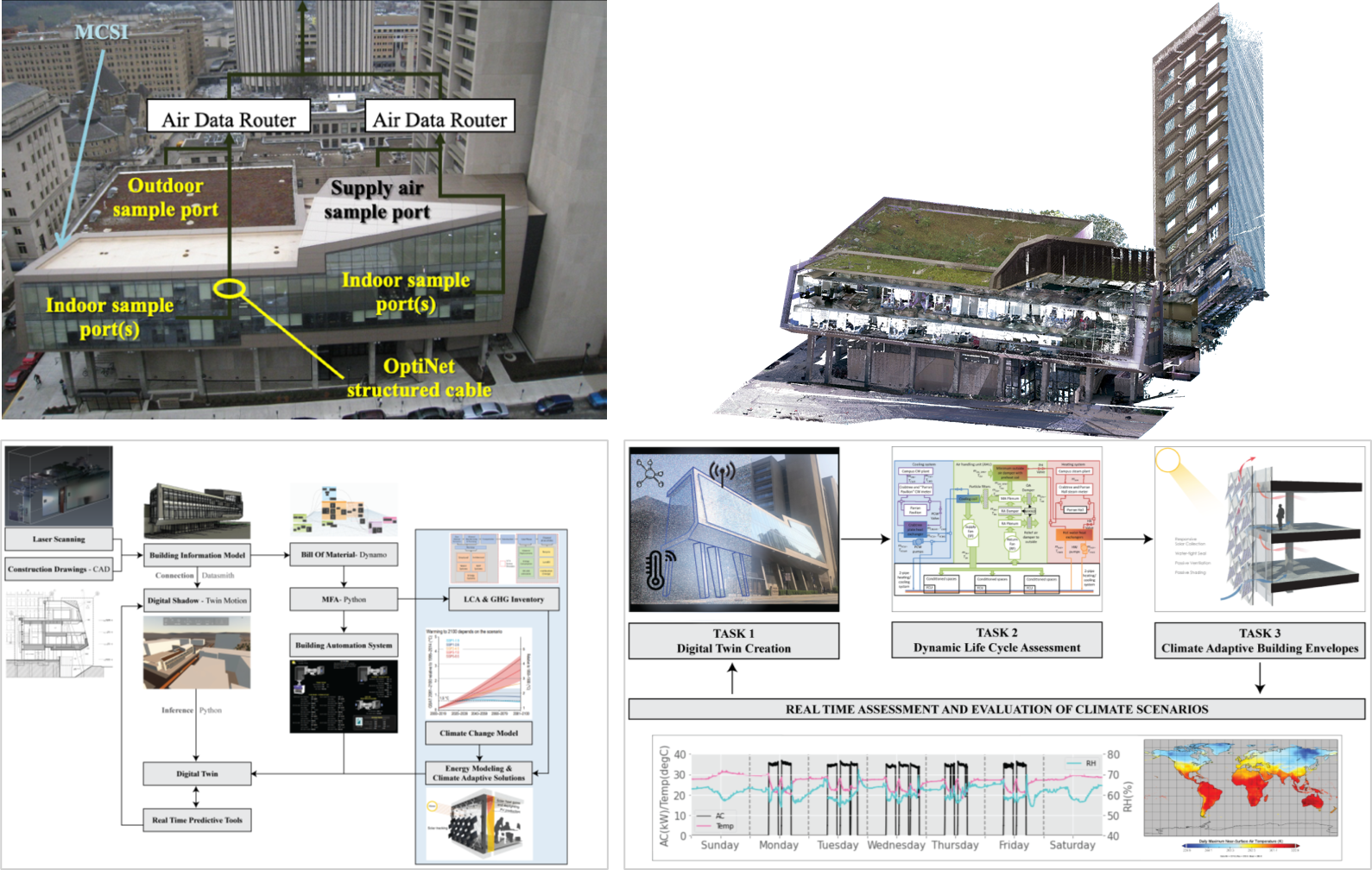
NSF-funded project aimed at creating a comprehensive Digital Twin of the Mascaro Center for Sustainable Innovation (MCSI) to advance climate-adaptive building design and sustainable operations. My work focuses on high-fidelity 3D modeling, BIM–LiDAR integration, and multi-source data fusion to support real-time monitoring, simulation, and decision-making in building performance management.

2023.04–2024.08: 3D Mesoscale Modeling of Concrete Consolidation and Packing Behavior

thumbnail

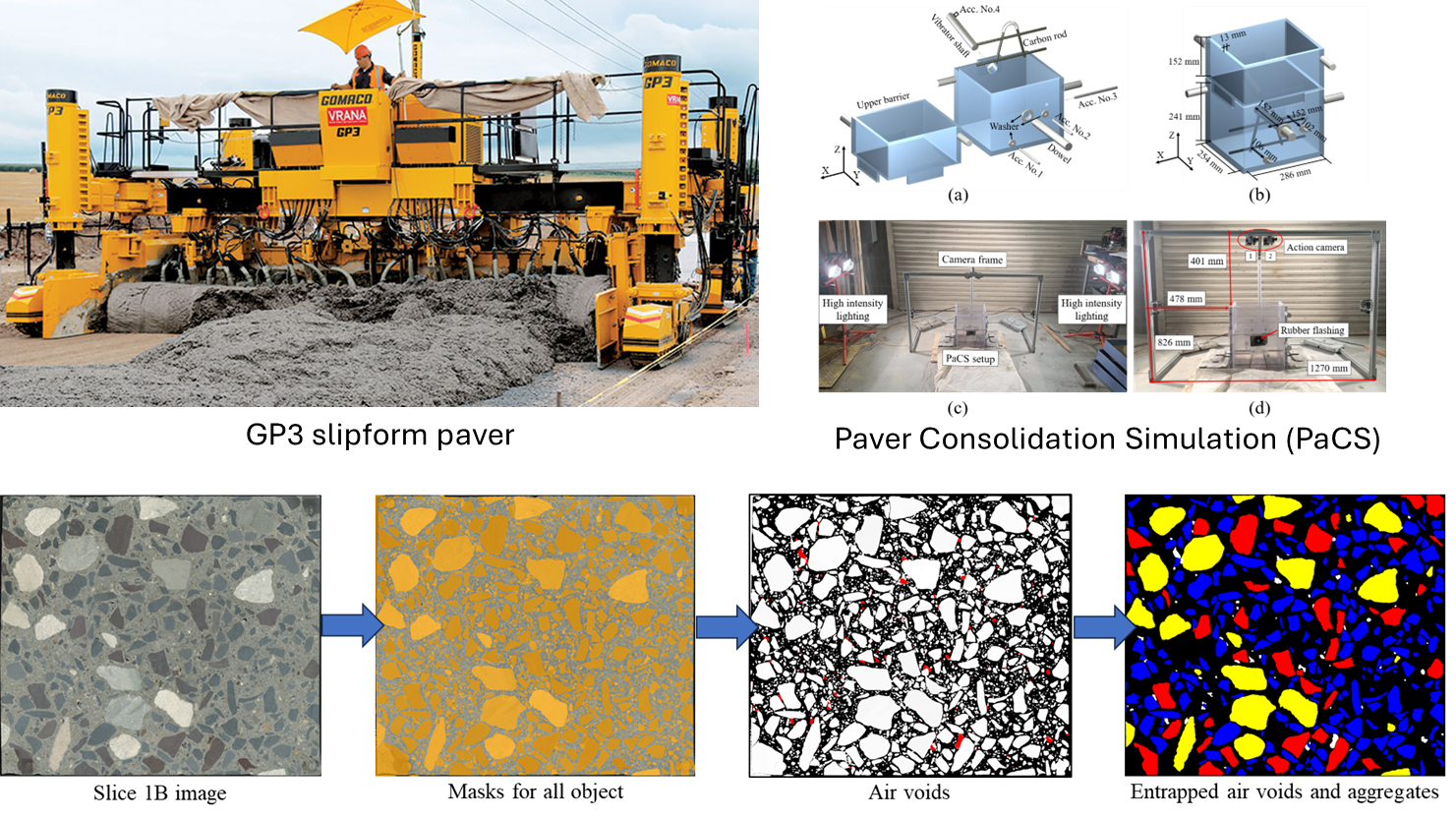
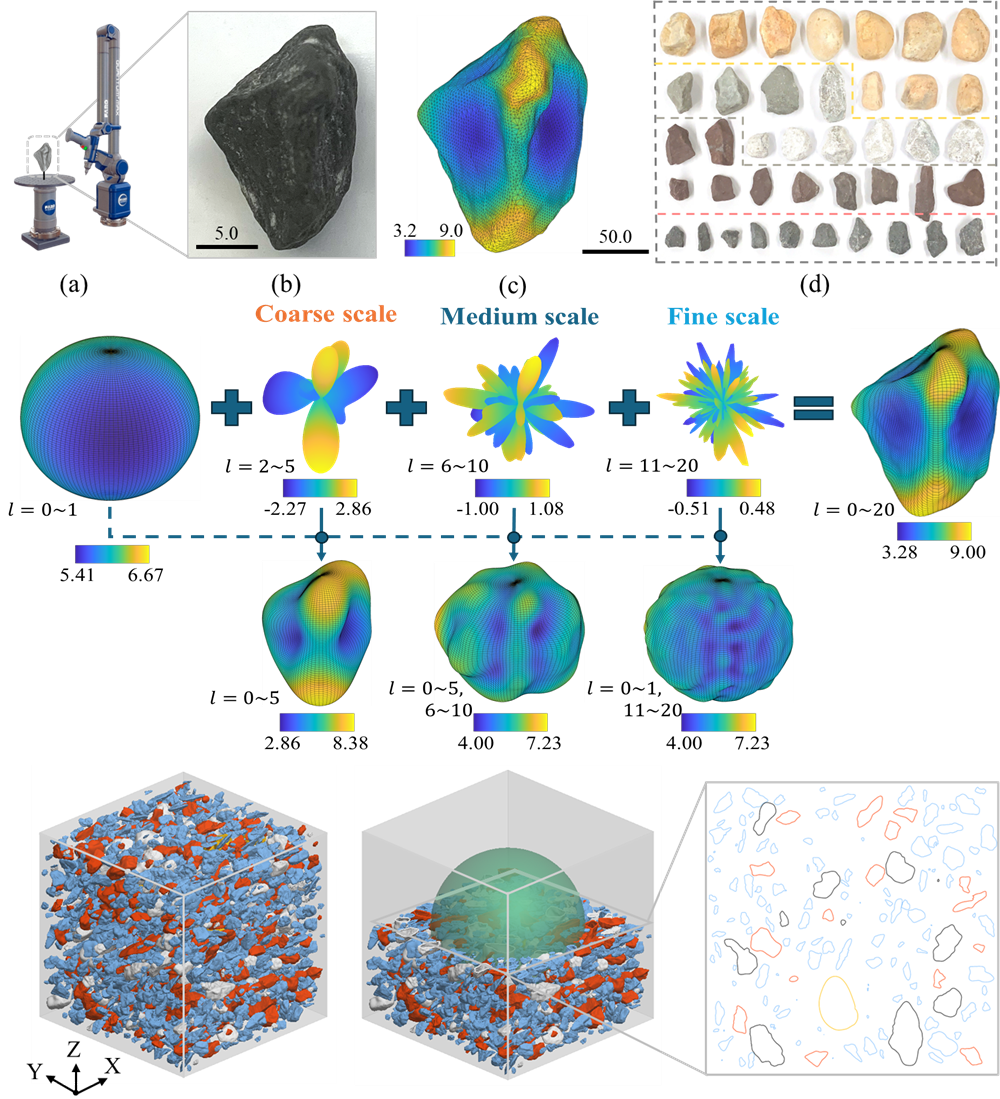
Established a physics-informed 3D mesoscale framework that combines spherical harmonic expansion, stochastic morphology generation, and DEM simulations to investigate aggregate packing and consolidation in slipform paving. The framework enables quantitative evaluation of vibratory energy transmission, aggregate distribution uniformity, and mortar–aggregate interactions under varying compaction conditions. This approach bridges experimental measurements with predictive modeling, providing a robust basis for optimizing construction parameters to achieve superior consolidation quality.

2022.08–2024.08: Computer Vision-Based Quality Control System for Slipform Paving

thumbnail

Designed and validated a real-time quality control system for slipform paving that integrates stereo vision, photometric stereo, and transformer-based segmentation to detect entrapped air voids and monitor aggregate distribution. The system was deployed in both laboratory and field environments, enabling high-resolution surface reconstruction and automated compliance with ASTM C457 air void analysis procedures. This work advances objective, data-driven evaluation of consolidation uniformity, reducing reliance on manual inspection and enhancing pavement durability.

2020.10–2022.08: Mechanical Evaluation of Lightweight Concrete with Core-Shell Structured Aggregates

thumbnail

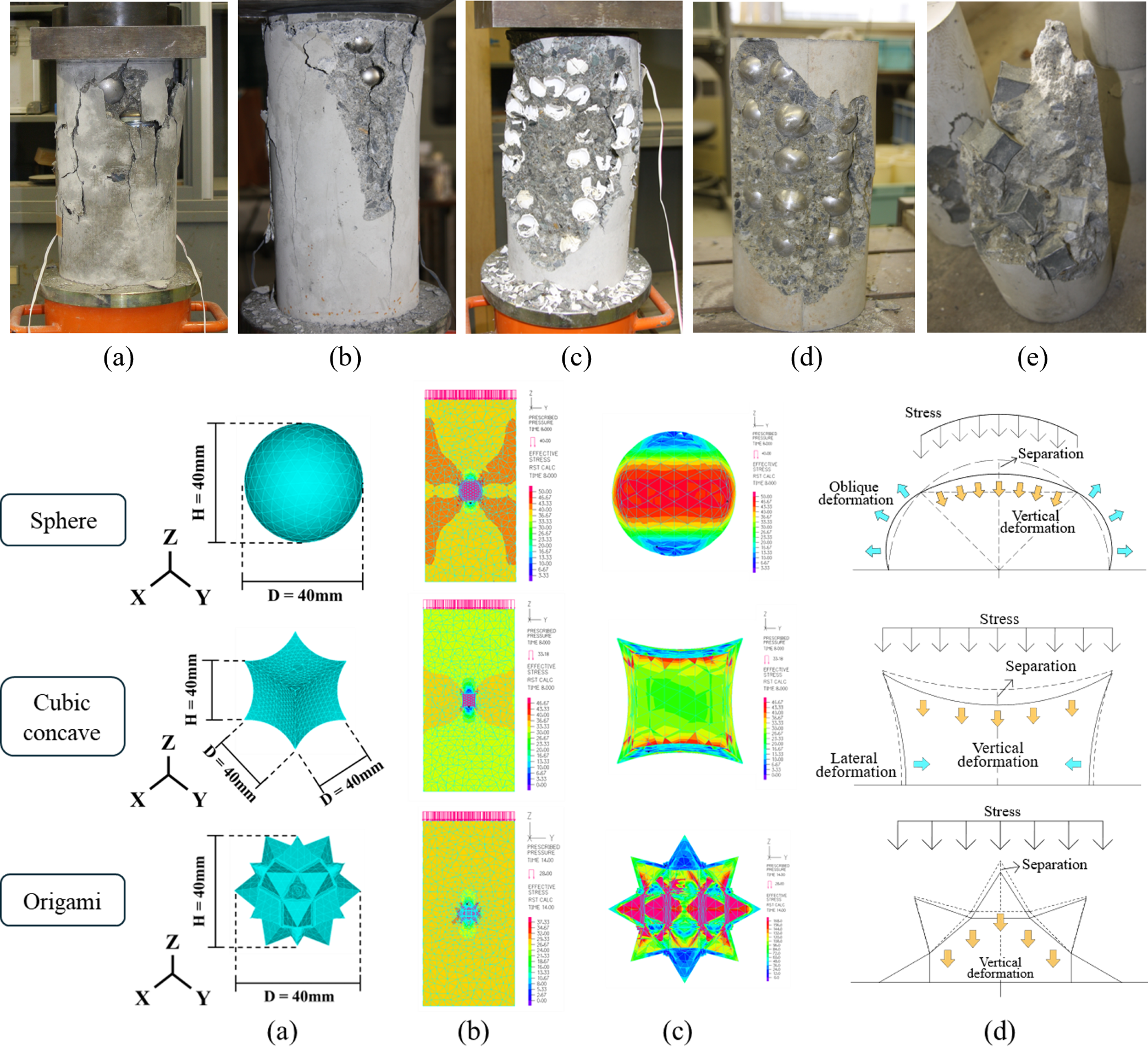
Advanced the design of lightweight concrete through the development of core-shell structured aggregates (CSA) that achieve substantial density reduction while maintaining high mechanical performance. The study combined nonlinear finite element simulations, particle swarm optimization, and large-scale experimental validation to investigate the influence of aggregate geometry, shell thickness, and material stiffness. Results provide actionable guidelines for mix design and manufacturing, supporting sustainable construction through reduced material consumption and improved structural efficiency.